

A listing performs better when the property is already ready for guests. This guide walks through what to settle before publishing, in order: paperwork, safety, equipment, photographs, rules and operations.
Before buying anything: decide who you are renting to
A weekend couple, a family of four and someone working remotely need different things. Choose the guest profile first and equip the apartment for them, so you avoid spending on details nobody will value.
Check real capacity too: beds, bathroom, kitchen and shared areas. Advertising more places than the apartment serves well tends to produce worse reviews, not more income.
Paperwork, building rules and permits
Confirm you can rent for short stays. Read the building or complex rules, ask the administration about noise, visitors, pets and guest access, and check whether your purchase or mortgage agreement restricts short-term letting.
Tax and registration requirements for tourist rentals in Panama change over time and depend on each case. Check them with a professional and the competent authority before listing; this guide does not replace that advice.
Safety: the first thing that gets checked
Safety is not negotiable and should not wait. Make it visible and easy to understand for someone arriving for the first time.
- Locks in good condition and an access system you can change between stays (keypad lock or key box).
- Smoke detector and fire extinguisher within reach, with instructions in view.
- Electrical and gas installations checked by a professional if in doubt.
- A basic first-aid kit and a list of emergency numbers in the apartment.
- Balcony, stairs and wet floors assessed carefully, especially for travelling children.
Beds, kitchen and bathroom: what actually gets used
Think of a three-night stay. Beds need comfortable mattresses, two sets of bed linen per bed and spare pillows. The bathroom needs enough towels and basic consumables. The kitchen needs well-chosen essentials rather than lots of unused equipment.
- Beds: quality mattress, washable protector and spare linen.
- Bathroom: a towel per guest, hairdryer, toilet paper, soap and shampoo in dispensers.
- Kitchen: pans, pots, knives, utensils, tableware for the advertised capacity, coffee maker and pantry basics.
- Cooling: air conditioning or ventilation that works well; service it before the season.
- Connectivity: stable Wi-Fi and, if you target remote workers, a comfortable desk with a chair and sockets.
- Storage: a closed cupboard for your personal items and the manager’s consumables.
Simple, neutral décor that is easy to clean
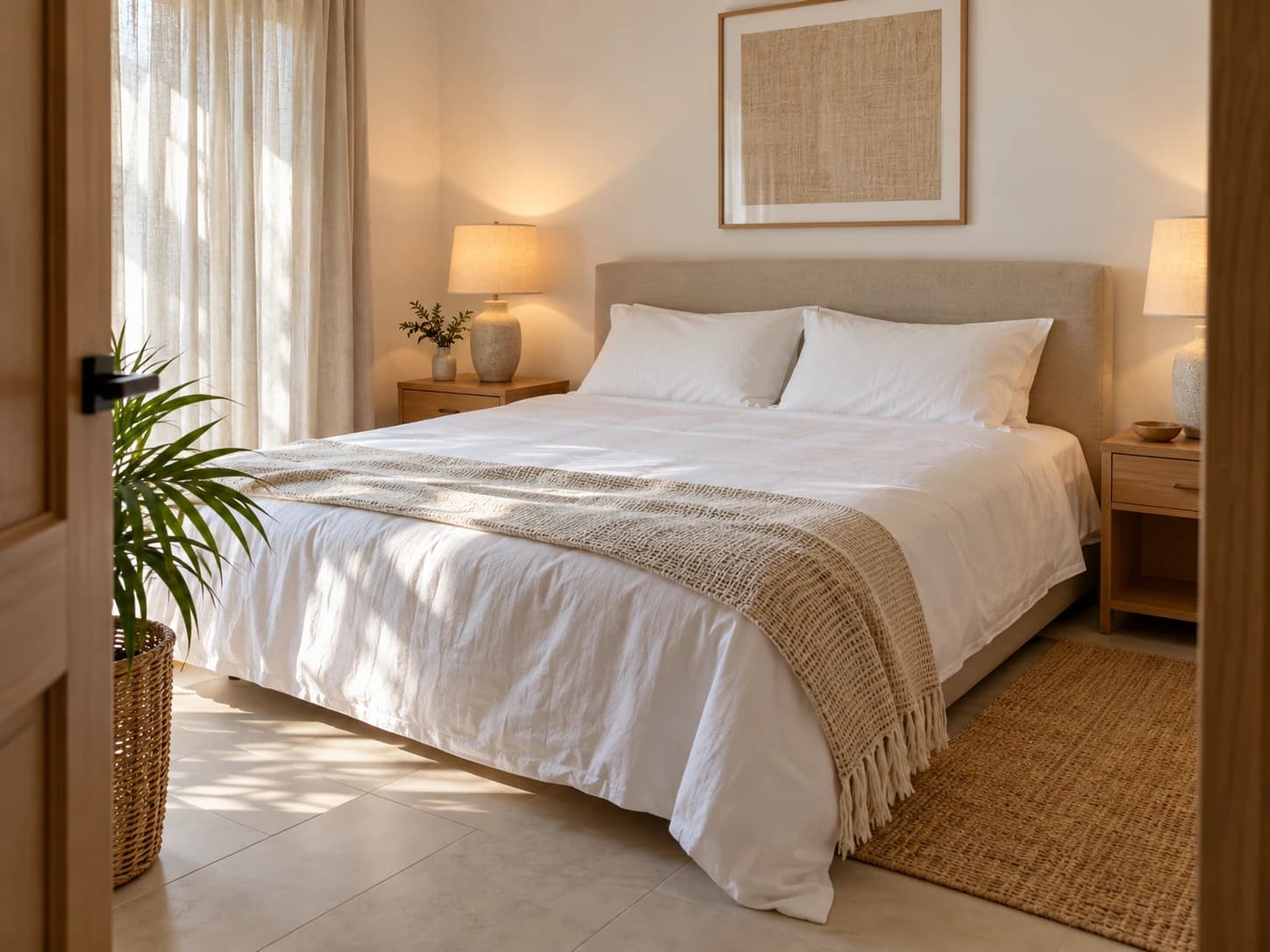
Fewer personal items and more order. Smooth surfaces, washable textiles and neutral colours make cleaning easier and photograph well. A couple of local touches (a plant, a craft piece, a warm lamp) add character without complicating upkeep.
Avoid fragile or sentimental objects. Set the space up to be used comfortably, not to be displayed.
Photographs that show what the guest will find
Photos are the first conversation with the guest. Take them in natural light, with the apartment tidy and every space visible: bedroom, bathroom, kitchen, living room, balcony and the complex’s shared areas.
Show what is real. Distinguish the building or complex areas (pool, beach, gardens) from the apartment’s own, and avoid images that suggest more than is offered. An honest description prevents negative reviews caused by mismatched expectations.
Clear, friendly house rules
Write short, specific rules: quiet hours, visitors, pets, smoking, parties and use of shared areas. Present them warmly, without threats, and keep them identical in the listing, the pre-arrival message and the apartment itself.
A free print-ready house rules template is available in the AGS guides library.
Operations: arrivals, cleaning and maintenance
The experience depends on the property as much as on how it is managed. Before listing, decide how check-ins and check-outs work, who cleans and inspects between stays, where linen is stored, how consumables are restocked and who handles an incident.
If you decide to delegate, ask in writing what the service includes, how much the manager can approve without consulting you and how you will receive the report for each stay.
To compare proposals with confidence, read the guide on vacation rental management fees and costs.
Final checklist before listing
When you are ready, you can simulate income and costs with your own assumptions.
- Permits, building rules and tax requirements reviewed.
- Safety checked: access, smoke detector, extinguisher and first-aid kit.
- Beds, bathroom and kitchen equipped for the advertised capacity.
- Wi-Fi and cooling tested.
- Current, honest photographs in natural light.
- House rules written and consistent across channels.
- Arrival, cleaning and incident process defined.
- Costs and scenarios reviewed in the calculator.
If you would rather have help
AGS can review with you the apartment’s condition, what is missing and how operations would work in your area. Availability and scope are defined for each property before anything is agreed; this guide sets no public results or terms.
The next step is to request an assessment of your property.
Your next step
Take the next step in getting your apartment ready
Tell us about its current condition and what you still need to arrange. We can discuss the preparation and management it needs before welcoming guests.